The Honest Answer: It Depends on Your Stage
I've spent the last 5 years running both organic SEO and paid search across a portfolio of 44 websites. I've watched paid campaigns generate revenue in week one. I've also watched organic pages built 3 years ago still pull in traffic at zero marginal cost.
The question isn't "which is better?" It's "which is right for your business right now?"
Paid search rents traffic. You pay per click, every time, with no residual value when you stop. Organic search builds an asset. It's slower to start — typically 3-6 months before meaningful results — but traffic compounds and continues after spend pauses.
Neither channel is universally better. The right choice depends on three things: your business stage, your budget, and how quickly you need returns.
When Paid Ads Win
Paid search wins in situations where speed matters more than efficiency.
Product-market fit testing. If you're pre-revenue or launching a new offer, you need conversion data in weeks, not months. Running Google Ads for 30 days tells you which keywords convert, which landing pages work, and whether your pricing resonates. That data is worth paying for.
Seasonal promotions. Black Friday, back-to-school, tax season — if you have a 2-week window, organic can't help you. Paid search fills gaps that content can't cover on a deadline.
Competitive queries where organic takes 12+ months. In verticals with entrenched authority sites, ranking organically for head terms like "best business insurance" or "CRM software" could take 18-24 months. Paid gets you on page one tomorrow.
Retargeting existing visitors. Someone visited your pricing page but didn't convert. Retargeting via paid ads brings them back at a fraction of cold acquisition cost. Organic can't do this.
Immediate lead generation for a new business. You have a sales team waiting. You need leads this month, not next quarter. Paid is the answer.
When Organic Wins
Organic search wins where time horizon extends beyond 6 months and compound returns matter.
Compounding traffic over 6-12+ months. A page I published in 2023 on one of my portfolio sites still generates 400+ clicks per month. I haven't touched it since. That's the organic advantage — content appreciates rather than depreciates.
High-CPC verticals. In legal services, average CPCs run £15-40 per click. Finance sits at £20-50. Insurance can exceed £60. At those rates, a single organic ranking displacing paid clicks saves thousands monthly. If your vertical's CPC is above £10, the ROI case for organic is strong.
Building defensible market position. A competitor can outbid you on Google Ads tomorrow. They can't replicate 18 months of topical authority and 200 interlinked pages overnight. Organic rankings are harder to displace than paid positions.
Content that serves both SEO and sales enablement. The guide you write targeting "how to choose a CRM" ranks in Google and gets sent to prospects by your sales team. That's double value from a single asset.
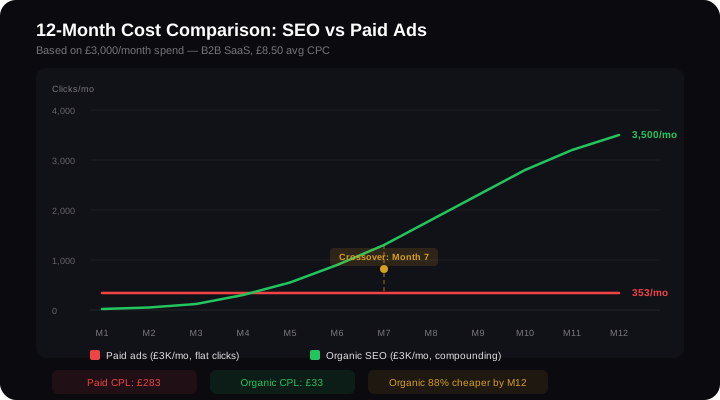
The 12-Month CAC Comparison
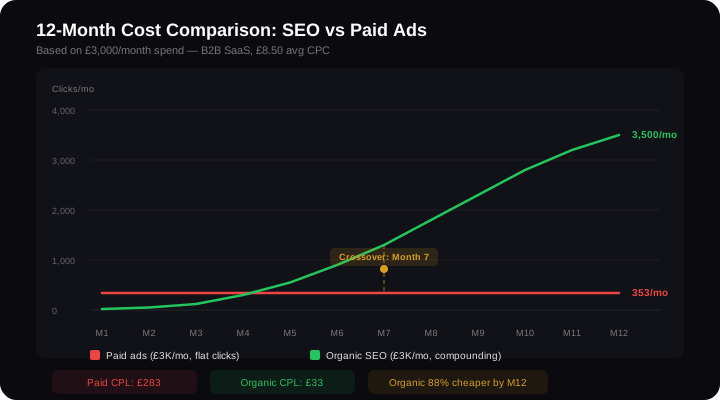
Here's a worked example I've used in actual board presentations.
Scenario: £3,000/month budget, B2B SaaS, average CPC of £8.50.
Paid path: £36,000 over 12 months. At £8.50 CPC, that's roughly 4,235 clicks. Assuming 3% conversion rate: 127 leads. Cost per lead: £283. Stop paying in month 13 — leads drop to zero.
Organic path: £36,000 over 12 months (agency fees, content production, technical SEO). Months 1-3 generate minimal traffic while content indexes. Months 4-6 see early rankings. By month 12, a well-executed strategy typically generates 2,000-4,000 organic clicks per month. At the same 3% conversion rate and 3,000 monthly clicks: 90 leads per month by month 12. Cost per lead in month 12: £33. Pause spend in month 13 — traffic continues at 70-80% of peak for 6+ months.
By month 12, organic CAC is typically 40-60% lower than paid. The compounding effect makes this gap wider every month after. For a deeper look at how to calculate what that organic traffic is worth in financial terms, see my guide on valuing website organic traffic.
The Portfolio Approach: Do Both
Most smart founders don't pick one channel. They run both and shift the ratio over time.
Launch phase (months 1-3): 70% paid, 30% organic. Paid generates immediate leads and conversion data. Organic investment goes into technical foundations, keyword research, and first content pieces.
Growth phase (months 4-9): 50% paid, 50% organic. Early organic rankings start delivering traffic. Paid budget focuses on high-intent keywords and retargeting. Organic budget scales content production.
Maturity phase (months 10-18): 30% paid, 70% organic. Organic traffic compounds and handles most top-of-funnel volume. Paid narrows to retargeting, seasonal campaigns, and testing new keywords before committing SEO resource.
Established phase (month 18+): 20% paid, 80% organic. Organic is the primary growth engine. Paid is surgical — used only where organic can't reach or for competitive defence.
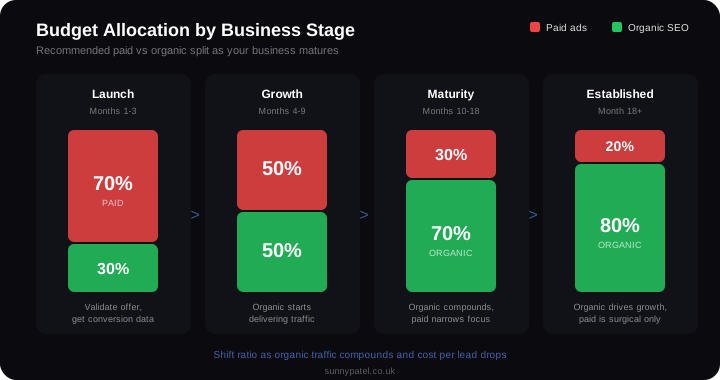
This isn't theoretical. I've seen this pattern play out across e-commerce, SaaS, and local service businesses. The ratio depends on your vertical's CPC and competitive landscape, but the direction of travel is consistent.
How to Decide for Your Business
Use this framework. Answer each question honestly.
Monthly budget under £2,000? Start with paid only. Splitting a small budget across two channels dilutes both. Use paid to validate your offer, then shift to organic once revenue supports it.
Need leads within 30 days? Paid. Organic won't deliver fast enough regardless of budget.
CPC in your vertical above £15? Prioritise organic. The maths favour building rankings over paying per click at those rates.
Already have some organic authority? (Check: do you rank for any non-brand terms?) If yes, increase organic investment — you're past the hardest phase. If no, expect 4-6 months before organic contributes meaningfully.
Competitive landscape entrenched? If the top 5 organic results are all DR 70+ sites with thousands of pages, organic is a 12+ month play. Use paid for immediate revenue while building the long game.
| Your Situation | Recommended Split | Timeline to ROI |
|---|---|---|
| Pre-revenue, testing offer | 90% paid / 10% organic | 2-4 weeks (paid) |
| New business, need leads now | 70% paid / 30% organic | 1-3 months (paid), 6-9 months (organic) |
| Growing, some organic traction | 50% paid / 50% organic | Ongoing from both channels |
| Established, high CPCs | 30% paid / 70% organic | Organic is already delivering |
| Mature brand, strong rankings | 20% paid / 80% organic | Organic drives majority of growth |
What Investors Should Ask Portfolio Companies
If you're advising or evaluating a business, these questions cut through the noise.
"What's your organic vs paid traffic split?" A business getting 80%+ of traffic from paid is renting its audience. That's a risk factor, not a growth signal.
"What happens to revenue if you pause paid spend for 30 days?" If the answer is "revenue drops 50%+", the business has a paid dependency problem. Organic should be an insurance policy against this.
"What's your organic traffic trend over 12 months?" Flat or declining organic while paid scales means the business is choosing the expensive path. Growing organic alongside paid is the healthy pattern.
"What's your blended CAC trend?" If blended CAC is rising quarter over quarter, the business is likely over-indexed on paid. Organic investment typically pulls blended CAC down over time as it compounds.
These aren't gotcha questions. They're the metrics that separate businesses building real market position from those buying temporary visibility. For a deeper dive on which SEO metrics matter at board level, I've written a dedicated guide.
The Bottom Line
Paid search is a tap. Turn it on, leads flow. Turn it off, they stop.
Organic search is a pipeline. It takes months to build, but once flowing, it delivers at a fraction of the cost — and keeps delivering after you stop spending.
The right strategy uses both. Start with paid for speed and data. Build organic for efficiency and durability. Shift the ratio as your organic asset matures. And measure success not by either channel alone, but by whether your blended customer acquisition cost is falling over time.