I manage 44 websites. Not client sites — my own properties, where I see every Google Search Console report, every revenue line, every traffic drop. That data has taught me something uncomfortable: most website valuations get organic traffic wrong. Not slightly wrong. Structurally wrong.
The problem isn't fraud. It's that sellers, brokers, and even experienced investors use the wrong numbers. They look at total traffic when they should look at non-brand clicks. They treat all organic visits equally when commercial-intent traffic is worth 5x more than informational traffic. They skip the defensibility question entirely.
Here's how I value organic traffic — the same method I use when assessing my own portfolio of 44 sites.
The Basic Valuation Formula (and Why It's Incomplete)
The standard formula is simple:
Monthly organic revenue × multiplier = website value
Multipliers typically range from 24x to 36x for sites with stable organic traffic. A site earning £3,000/month from organic search would be valued at £72,000 to £108,000.
That formula works — if you get the "monthly organic revenue" number right. Most people don't.
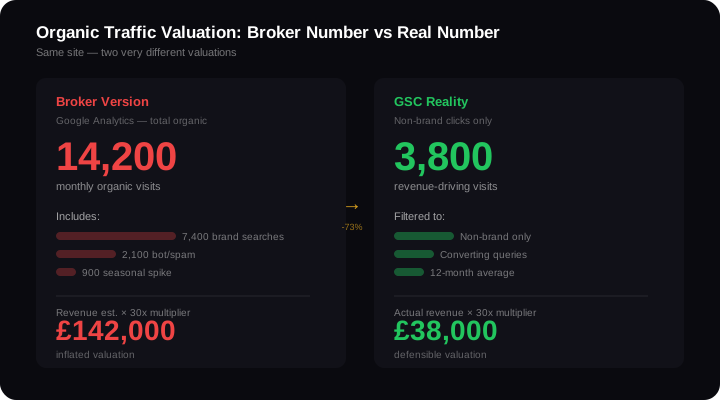
The mistake is using total organic traffic from Google Analytics. That number includes brand searches (people who already know the business), bot traffic, and visits that never convert. It's a vanity metric dressed up as a revenue driver.
The real calculation:
Non-brand organic clicks (from GSC) × conversion rate × average order value = actual monthly organic revenue
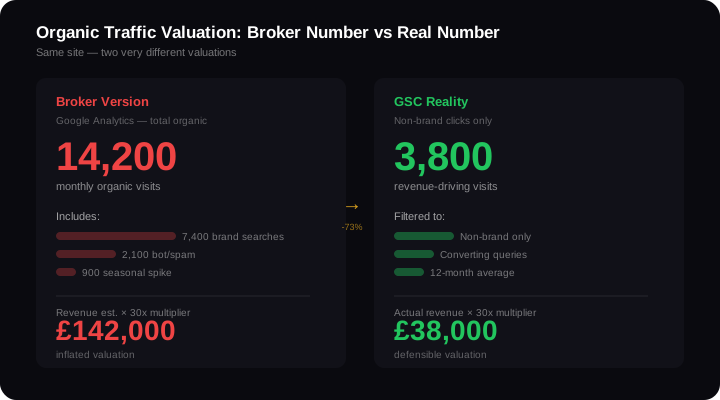
On one of my sites, the Google Analytics "organic traffic" number was 14,200 visits/month. After filtering to non-brand clicks in Search Console and matching against actual conversions, the revenue-generating organic traffic was 3,800 visits. That's a 73% reduction from the headline number. At a 30x multiplier, that's the difference between a £142,000 valuation and a £38,000 valuation.
Why Broker Traffic Numbers Are Almost Always Inflated
Brokers have an incentive to present the largest number possible. They're not lying — they're choosing the most flattering metric.
Here's what typically gets bundled into "organic traffic" on a listing:
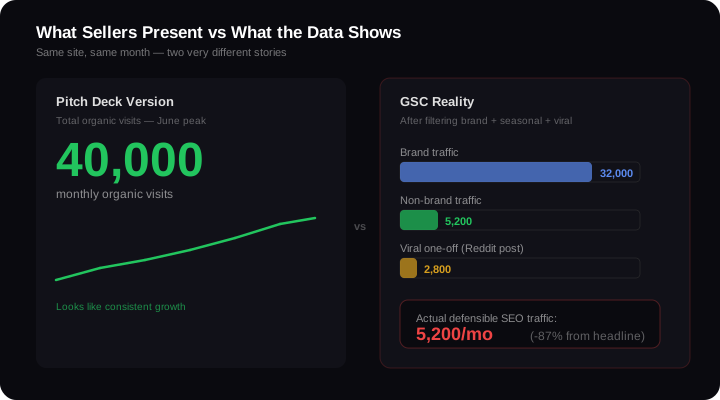
- Brand searches. Someone typing "companyname.com" into Google and clicking through is counted as organic. It's not SEO-driven traffic — it's brand awareness.
- Bot and spam traffic. Google Analytics doesn't filter all bots. I've seen sites where 15-20% of "organic" sessions were non-human.
- Seasonal peaks. Brokers pick the best 3-month window. A site averaging 6,000 visits/month might show 12,000 in its peak quarter.
- One-page spikes. A single article going viral on Reddit or Hacker News inflates the average. That traffic doesn't recur.
The fix is straightforward: ask for Google Search Console access. Filter to non-brand queries. Look at 12-16 months of data, not 3. If the seller won't share GSC, that tells you everything.
I covered the full due diligence process in my SEO due diligence guide for investors.
Traffic Quality Multipliers: Not All Clicks Are Equal
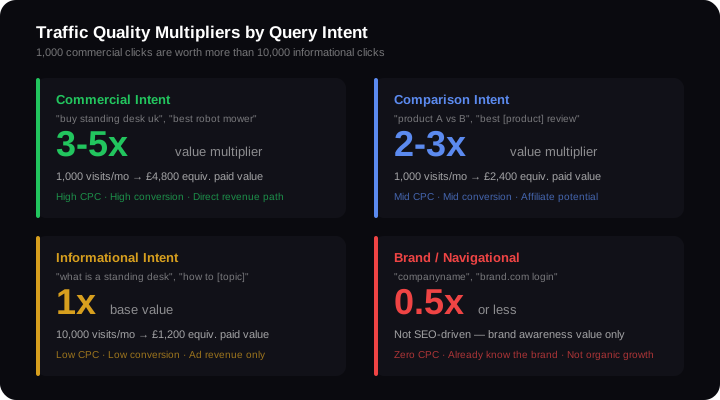
A site getting 1,000 visits/month from "buy standing desk uk" queries is worth more than a site getting 10,000 visits/month from "what is a standing desk" queries. The first site captures people ready to spend money. The second captures people reading for free.
Here's how I segment traffic quality:
| Query Type | Intent | Value Multiplier |
|---|---|---|
| "buy [product]", "best [product] uk", "[product] price" | Commercial | 3-5x base |
| "[product] vs [product]", "[product] review" | Comparison | 2-3x base |
| "how to [task]", "what is [topic]" | Informational | 1x base |
| "[brand name]", "[domain]" | Brand/navigational | 0.5x base |
When I audit a potential acquisition, I export all queries from GSC, classify them by intent, and weight the traffic accordingly. A site with 80% commercial-intent traffic at 5,000 visits/month is worth more than a site with 80% informational traffic at 20,000 visits/month.
This is also why SEO metrics for board reporting should separate traffic by intent — it changes the story completely.
The Equivalent Paid Traffic Method
This is the valuation method I trust most, because it gives you a number you can compare against actual ad spend.
Take the top 20 non-brand keywords driving organic clicks. For each one:
- Look up the Google Ads CPC (use Google Keyword Planner, not third-party estimates)
- Multiply CPC by monthly organic clicks for that keyword
- Sum the totals
The result is the "replacement cost" — what you'd pay in Google Ads to buy the same traffic.
Example from a real site in my portfolio:
| Keyword | Monthly Clicks | CPC | Equivalent Paid Value |
|---|---|---|---|
| "best robot lawn mower uk" | 340 | £1.82 | £619 |
| "robot mower review" | 210 | £1.45 | £305 |
| "husqvarna automower problems" | 180 | £0.68 | £122 |
| "robot mower for hills" | 95 | £2.10 | £200 |
| ... (16 more keywords) | ... | ... | ... |
| Top 20 total | 1,840 | — | £3,280/month |
That site's organic traffic generates £3,280/month in equivalent paid value. At a 30x multiplier, the organic traffic alone is worth roughly £98,400. That's a defensible number an investor can benchmark against their own paid acquisition costs.
Defensibility: The Metric Investors Miss
Traffic value means nothing if it disappears after the next algorithm update. Defensibility is the question most buyers skip.
The metric I use: query diversity ratio.
Unique queries with clicks ÷ total indexed pages = query diversity score
A score above 3.0 means the site ranks for a wide spread of terms across many pages. A score below 1.0 means most pages aren't earning any organic traffic — and the traffic that exists is concentrated.
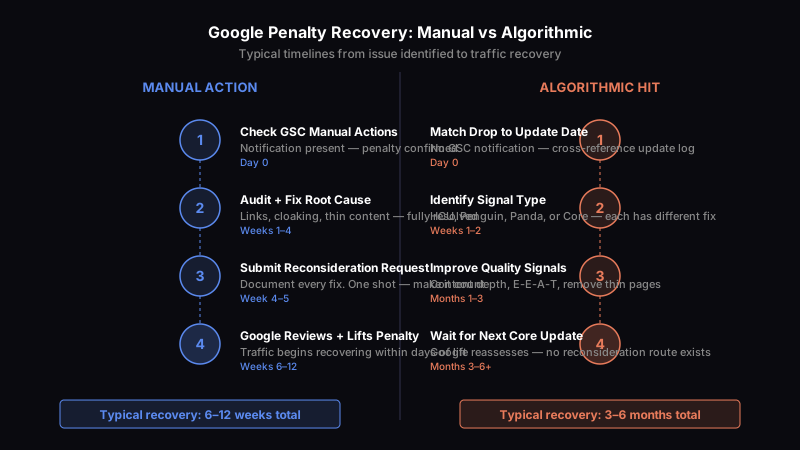
Why this matters: If 60% or more of a site's traffic comes from 5 keywords, one Google update targeting that topic cluster could wipe half the site's value overnight. I've watched it happen. A site in my portfolio lost 44% of its traffic in 8 days when a core update reshuffled rankings for its primary keyword cluster.
Diversified traffic is harder to kill. A site ranking for 2,000 different queries is far more resilient than one ranking for 20 — even if the total traffic is the same.
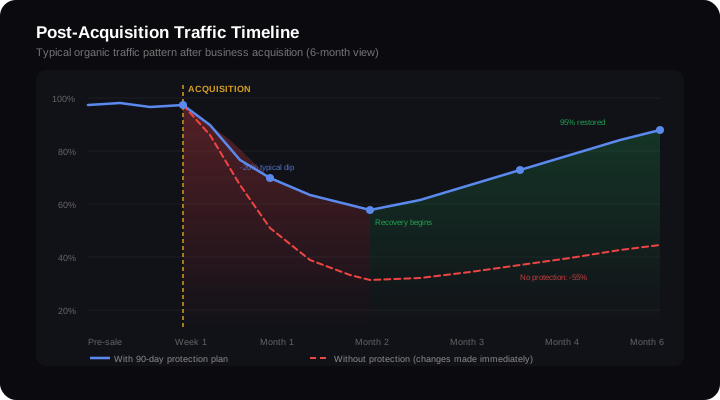
This is directly connected to what happens after an acquisition — concentrated traffic demands immediate diversification work, which costs time and money.
Red Flags That Should Reduce Your Valuation
Six signals that tell me a site's organic traffic is worth less than the headline number suggests:
Declining non-brand traffic (3-month trend). Filter GSC to non-brand queries and compare the last 3 months to the previous 3 months. A downward trend means the site is losing organic ground, regardless of what total traffic shows.
Single-page dependency. If one page drives 40% or more of total organic traffic, the site's value is fragile. One ranking drop on that page and the business model breaks.
Thin content propping up rankings. Pages ranking with 200-word articles and no depth. These are first to drop in a quality update. Check the top 10 traffic-driving pages — are they genuinely useful or are they ranking on domain authority alone?
PBN or toxic backlinks. Private blog network links are a time bomb. They work until Google identifies the network, then every site linked from it gets hit. Use Ahrefs to check for patterns: same IP range, same registrar, same thin content across linking domains.
No technical SEO foundation. Missing canonicals, broken internal links, no mobile optimisation, no structured data. A site ranking despite these problems is borrowing time. A technical SEO audit should be part of every acquisition.
Low query diversity. Fewer than 50 unique ranking queries across the whole site means the traffic is concentrated and vulnerable. Healthy sites rank for hundreds or thousands of unique terms.
Real Numbers From My Portfolio
I'll use two of my own sites to illustrate how the same traffic metric tells different stories.
Site A — wagearea.co.uk (high impressions, low value per visit): This site generates 14,000+ impressions per month across salary-related queries. Sounds impressive. But the clicks are low (position 57 average), the queries are informational ("what does a [job] earn"), and there's no direct monetisation path. The equivalent paid traffic value is under £200/month because salary CPCs are low and the intent is research, not purchase. High volume, low value.
Site B — deadhangs.com (lower volume, higher value per page): This site has far fewer total impressions but stronger metrics where they count. Real clicks from people searching specific product-related and technique-related queries. Higher CTR because the content matches intent precisely. The equivalent paid traffic value per page is 4x higher than Site A because the queries have commercial intent (equipment, programmes, techniques people pay for).
The lesson: don't compare raw traffic numbers between sites. Compare equivalent paid traffic value per page. That normalises for intent, volume, and monetisation potential.
The Valuation Checklist
Before putting a number on any site's organic traffic:
- Get GSC access — not Google Analytics, not Ahrefs estimates
- Filter to non-brand queries only
- Calculate equivalent paid traffic value for top 20 keywords
- Check query diversity ratio (target above 3.0)
- Review 12-month non-brand traffic trend
- Identify single-page dependencies
- Audit backlink profile for PBN patterns
- Classify traffic by intent (commercial vs informational)
Do this before you apply any multiplier. The multiplier only makes sense when the base number is honest.
I've written more about the metrics that matter for ongoing monitoring in my SEO metrics for boards guide, and the full technical checklist in my due diligence framework for investors.
Organic traffic has real, measurable value. But only if you measure the right things.