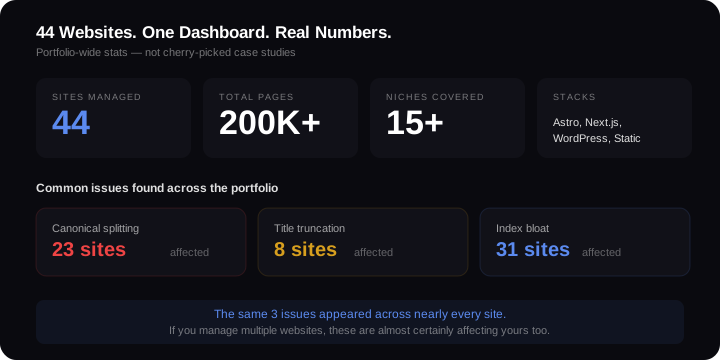
I've audited over 40 websites in the last two years. At least half were "managed" by an SEO agency. The site owners were paying between £1,000 and £5,000 a month. Most had nothing to show for it.
Not because SEO doesn't work. Because the agencies were reporting on metrics that don't matter, hiding the ones that do, and banking on the fact that most founders don't know the difference.
This isn't an attack on all agencies. Good ones exist. But if you're reading this, you probably suspect yours isn't one of them. Here's how to find out.
The vanity metrics agencies love to report
Every bad agency report I've seen leads with the same numbers. They look impressive. They mean almost nothing.
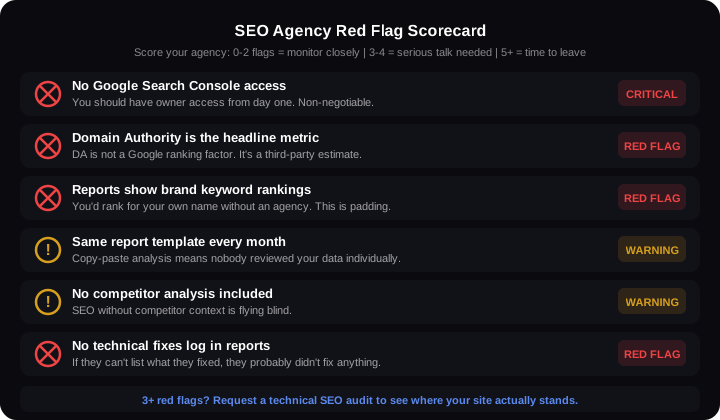
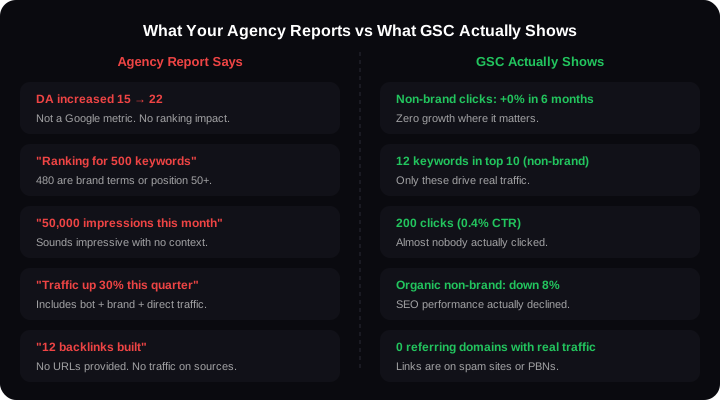
Domain Authority (DA). This is a Moz metric, not a Google metric. Google has confirmed they don't use it. Yet agencies report DA increases like they're ranking improvements. A DA jump from 15 to 22 doesn't mean your phone will ring more. I've seen sites with DA 12 outrank sites with DA 60 for profitable local terms.
"We rank for 500 keywords." Which ones? If 480 of them are branded terms (your company name) or informational queries that don't convert, that number is decoration. I manage 44 websites — I can tell you that 10 keywords driving conversions beat 500 keywords driving nothing.
Traffic graphs that go up and to the right. Check what's included. Many agency reports pull from Google Analytics without filtering out bot traffic, direct traffic, or branded searches. Your traffic might look like it's growing while your actual organic visibility hasn't moved in months.
Impressions without clicks. Impressions mean Google showed your page to someone. It doesn't mean anyone clicked. I've seen reports trumpet "50,000 impressions this month" while clicks sat at 200. That's a 0.4% click-through rate. That's not growth. That's a problem.
5 questions to ask your agency right now
These aren't trick questions. Any competent agency can answer them in minutes. If yours can't, or won't, you have your answer.
1. Do I have owner access to Google Search Console?
Not viewer access. Not "we'll send you a report." Owner access. GSC is your data about your website. There's no legitimate reason to withhold it. If you don't have it, request it today. If they push back, that tells you everything.
2. What percentage of my traffic is non-brand?
Brand traffic is people searching your company name. They already know you. Non-brand traffic — people searching for what you do without knowing who you are — is where SEO earns its money. If your agency can't split this out, they're either not tracking it or don't want you to see it.
3. Which pages drive the most conversions?
Not traffic. Conversions. Leads, calls, form fills, sales. If your agency built 20 blog posts and none of them drive a single enquiry, that content isn't working. Good SEO connects pages to revenue. It's something I cover in detail when running a technical SEO audit.
4. What technical issues have you fixed this quarter?
Specific answers only. "We optimised the site" means nothing. I want to hear: "We fixed 47 broken internal links, compressed 200 images saving 3.2 seconds load time, and resolved duplicate canonical tags on 15 product pages." If they can't list specific fixes, they probably haven't made any. These are the same SEO mistakes I find on almost every audit.
5. Can I see the actual backlinks you built?
Not a count. The actual URLs. Where the links are, what sites they're on, whether those sites have real traffic. If the links are on directories nobody visits or private blog networks, they're not helping you. They might be actively hurting you.
Red flags in agency reports
I've read hundreds of agency reports at this point. Here are the patterns that show up in the bad ones.
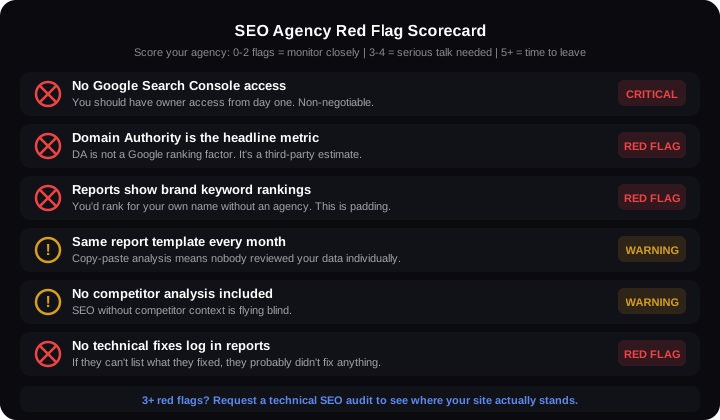
They lead with Domain Authority. Already covered, but it bears repeating. If DA is the headline metric, the agency is leading with a vanity number because the real numbers aren't impressive.
They show rankings for your brand name. You should rank number 1 for your own brand name without paying an agency. Reporting this as an achievement is padding.
Same report template every month. The graphs change, the commentary doesn't. Copy-paste analysis means nobody actually looked at your data. Real SEO work generates different findings every month because search is always moving.
No mention of competitors. SEO doesn't happen in a vacuum. If your report never mentions who's outranking you, what they're doing differently, or how competitive positions have shifted, the agency isn't watching the landscape.
Impressions without context. 50,000 impressions sounds good until you learn your competitor gets 500,000 for the same terms. Context turns numbers into insight. Without it, you're just looking at digits.
No technical fixes log. Every month should include a list of what was found and fixed. Crawl errors, broken links, page speed issues, schema problems. If this section is missing or vague, the technical work probably isn't happening. Understanding how long SEO takes helps set realistic expectations — but 6 months of no technical progress isn't a timeline issue. It's a work issue.
What honest SEO reporting looks like
For comparison, here's what I include in every client report.
GSC data with brand/non-brand split. Two separate views. Brand traffic shows awareness. Non-brand traffic shows SEO performance. Both matter, but they measure different things.
Actual clicks, not just impressions. Clicks mean someone chose your page from the results. That's the metric that connects to revenue.
Revenue attribution. Which organic pages led to enquiries, calls, or sales this month. Not every page needs to convert directly, but the overall channel should show a path to money.
Technical fixes log. Specific issues found, specific actions taken, before-and-after metrics where applicable. This month I fixed X, here's the impact.
Content published with measurable intent. Every page has a target keyword, a search intent match, and a conversion pathway. Not content for content's sake.
Competitor movement. Who gained, who lost, what changed. This is the context that makes your own data meaningful.
When to fire your agency
Patience matters in SEO. But patience has a limit.
Fire them if: you're 6+ months in with no non-brand traffic growth. SEO takes time, but 6 months is enough to see directional movement. If the trend line is flat, the work isn't landing.
Fire them if: you still don't have GSC access. There is zero excuse for this at any point in the engagement.
Fire them if: they can't explain what they did last month in specific terms. "We worked on your SEO" is not a deliverable. "We published 3 pages targeting these keywords, fixed these technical issues, and built these links" is a deliverable.
Fire them if: the reports could be generated with a free tool. If you could get the same data by logging into GSC yourself, the agency isn't adding analysis or insight. You're paying for a middleman.
What to look for in a replacement
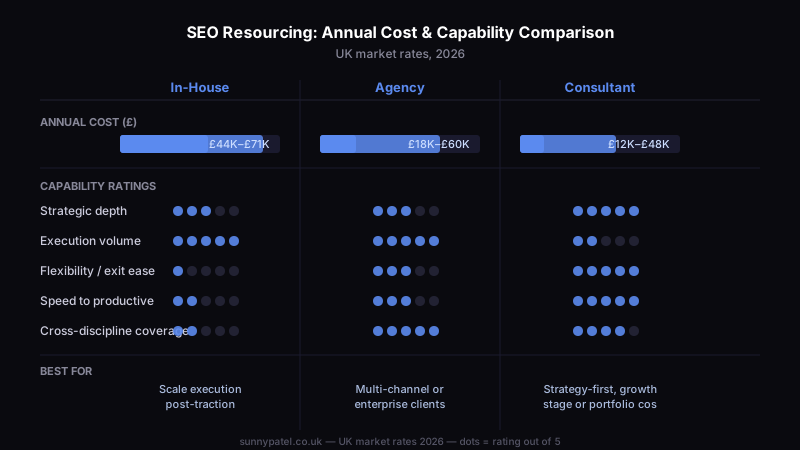
If you've decided to move on, here's what separates good from bad on the next round. I've written a deeper guide on how to choose an SEO consultant, but the essentials are:
Direct access to the strategist. Not an account manager who relays messages. The person doing the work should be the person you talk to. When you're paying £2,000+ a month, you deserve a direct line to the person making decisions about your site.
Transparent GSC data from day one. Owner access set up in the first week. No exceptions.
Specific technical fixes, not vague "optimisation." Ask in the first meeting: what would you fix first on my site and why? A good consultant will have looked at your site before the call and will name specific issues. A bad one will talk about "holistic strategy."
Monthly rolling contracts. Agencies that lock you into 12-month contracts know you'd leave if you could. Confidence in results means confidence in short commitments. I work on rolling monthly terms because the work should speak for itself.
A track record with data. Not testimonials. Actual before-and-after GSC data showing traffic growth on real sites. Anyone can collect nice quotes. Not everyone can show the graphs.
The bottom line
Your agency works for you. Your data belongs to you. Your results should be measurable by you.
If you can't log into Google Search Console right now and verify what your agency claims, something is wrong. If you've been paying for 6 months and can't point to specific improvements in non-brand traffic, something is wrong.
Ask the five questions. Check the red flags. Trust the data, not the deck.
And if you want a second opinion on what your agency has actually done, I run technical SEO audits that show you exactly where your site stands — no vanity metrics, no padding, just what GSC and the crawl data say.