I'll tell you upfront: I'm an independent SEO consultant. That means I have a financial interest in you choosing the consultant model. I'm going to set that aside and give you the honest version, because the wrong resourcing decision will cost you more than my day rate.
The three options — in-house hire, agency retainer, independent consultant — each make sense in specific circumstances. The mistake most business owners make is choosing based on price alone, or based on what they're most comfortable with commercially. What follows is a framework based on real cost structures and trade-offs, not a pitch.
What Each Model Actually Costs
In-House SEO
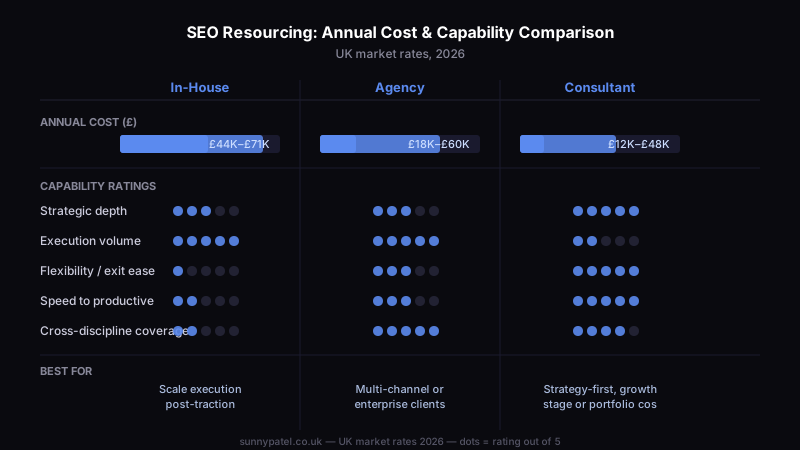
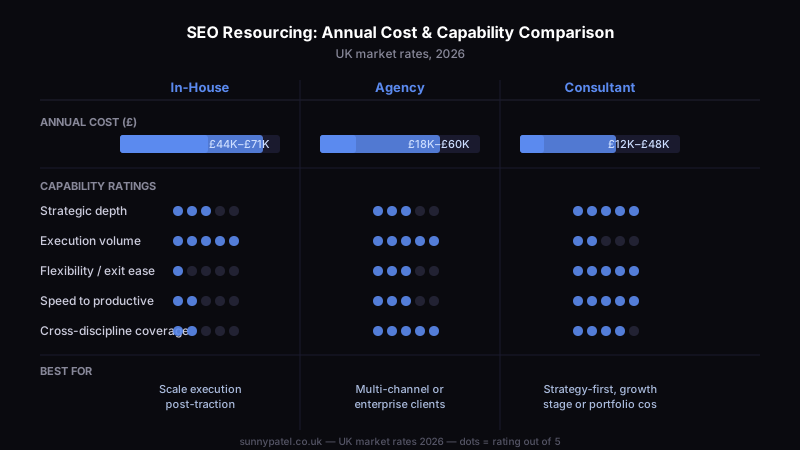
An SEO Manager in the UK earns £35,000–£55,000 depending on experience and location. That's the salary. The real annual cost once you add employer National Insurance (13.8%), pension contributions (3–5%), annual leave, sick pay, equipment, and training sits at £44,000–£71,500 per year.
You're also taking on recruitment risk. A good SEO hire takes 8–12 weeks to find, costs £3,000–£8,000 in agency fees or advertising, and takes another 3 months before they're genuinely productive. If the hire doesn't work out, you're 9 months in before you've noticed.
And in-house SEOs rarely cover all three SEO disciplines equally. Technical SEO, content strategy, and link acquisition require different skills and different temperaments. Most people are strong in one, competent in a second, weak in the third.
Agency Retainer
Agencies charge £1,500–£5,000 per month at the mid-tier, and upwards of £10,000 per month at the top end. That's £18,000–£60,000 per year for a mid-range engagement.
At the lower end of that range, you're typically getting a junior account manager, templated monthly reports, and execution that follows a standard playbook. At £3,500–£5,000 per month, you get a more senior team with genuine strategy input.
The structural issue with agencies — and I've seen this from both sides — is the gap between the pitch team and the delivery team. The senior strategist who sold you the contract typically moves to the next pitch once you sign. Day-to-day work passes to an account executive who may have 15–25 other clients. This isn't dishonesty; it's how the model works economically. The question is whether it works for you.
Independent Consultant
Consultant day rates in the UK run £500–£1,500 depending on specialism and track record. Most retainers work out to 2–6 days per month — so £1,000–£9,000 per month depending on scope. Typical mid-range: £2,000–£4,000 per month for an experienced generalist consultant.
The structural advantage is direct access: the person who assessed your site is the person doing the work. No account management layer. No hand-off to a junior for execution.
The structural disadvantage is capacity. A consultant can't produce 30 blog posts per month or execute a multilingual SEO programme across four markets simultaneously. If you need volume alongside strategy, you'll need content resource separately — or the hybrid model (more on that below).
When In-House Makes Sense
Hire in-house when all three of these are true:
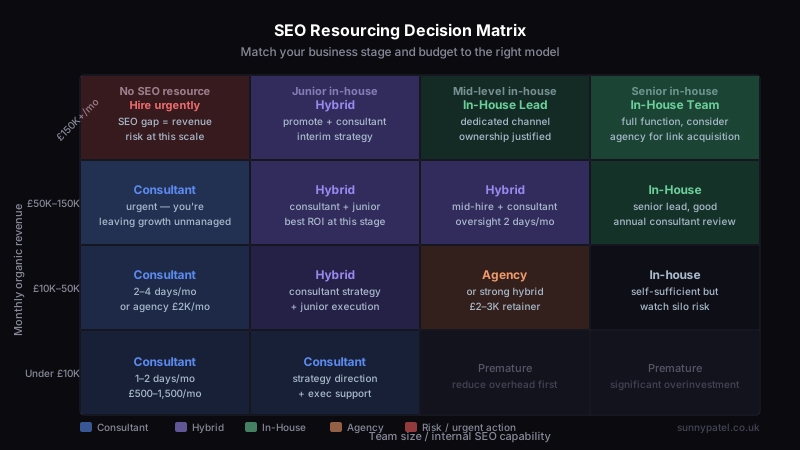
- SEO is your primary acquisition channel, generating more than £50,000 per month in organic-attributed revenue. Below that, you probably can't justify the fully-loaded cost of a dedicated hire.
- You have the technical infrastructure to support them. An SEO hire without developer access, CMS control, or a content production budget is a strategist with no levers to pull. They'll spend six months writing recommendations that don't get implemented.
- You want institutional SEO knowledge inside the business. For businesses where organic search is existential — media companies, e-commerce retailers, content platforms — having that expertise in-house rather than with a third party reduces dependency risk.
One scenario where in-house wins clearly: you've already built organic traction and need someone to scale it operationally. The strategic decisions have been made, the playbook is clear, and you need bandwidth to execute at volume. That's an in-house content or SEO executive, not a consultant.
When an Agency Makes Sense
Agencies work best when:
- You need multi-discipline execution simultaneously — content production, technical implementation, link acquisition, and reporting, all running in parallel.
- You're a larger business with a procurement process that requires a company rather than an individual. Some enterprise contracts and regulated sectors can't contract with sole traders.
- You want one point of contact for a broad digital remit, not just SEO. If you're buying SEO, paid search, and content marketing from one provider, an integrated agency can coordinate across channels in a way that individual consultants can't.
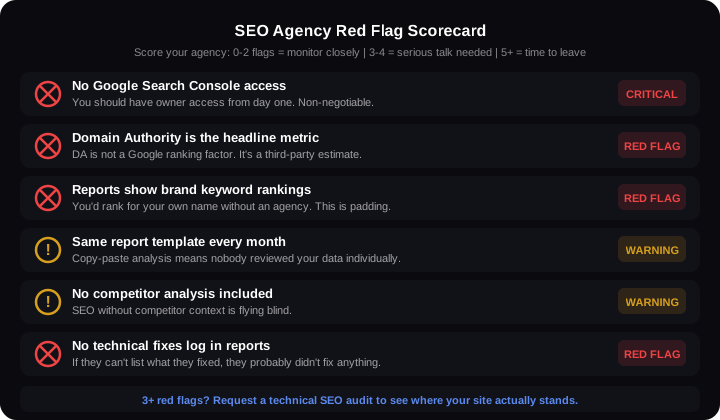
The honest caveat: most businesses spending £2,000 per month on an agency are getting a junior team working to a template. If that budget is your total SEO spend, a consultant will typically give you more strategic rigour for the same money.
When a Consultant Makes Sense
A consultant is the right call when:
- The business is growing but hasn't justified a full-time hire yet. Revenue is in the £20,000–£80,000 per month range from organic, there are clear optimisation opportunities, but daily execution doesn't require someone in-house full-time.
- You've had an agency and felt the disconnect. The account manager reports good numbers but you don't understand what work is actually happening. A consultant removes that layer entirely.
- You're making a significant decision — an acquisition, a site migration, a new market entry, a platform change — and need senior-level judgment, not template SEO.
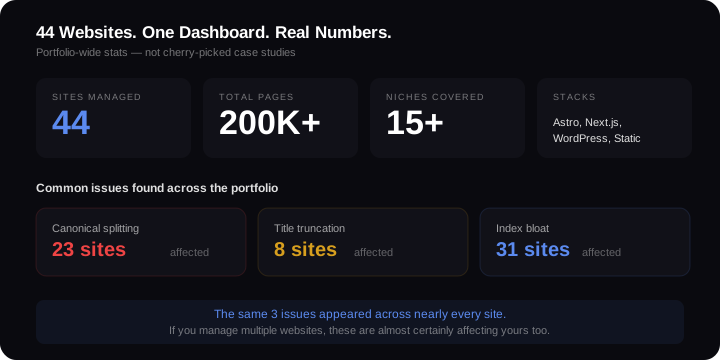
- You manage multiple businesses or a portfolio. I work across 44 sites simultaneously. The cross-portfolio pattern recognition is genuinely difficult to replicate from inside a single business. Recurring issues across your portfolio — whether you have 3 sites or 12 — are often visible to someone who sees them in aggregate.
I'm also cheaper per hour than an agency senior strategist, with no overhead baked in. You pay for work, not for the infrastructure of a business that employs 40 people.
The Hybrid Model
The highest-performing SEO setups I've seen — particularly in portfolio businesses and growth-stage companies — combine a consultant with an in-house execution resource.
The structure: An independent consultant (2–4 days per month) provides strategy, technical oversight, and quality control. An in-house executive — junior or mid-level, £28,000–£40,000 salary — handles day-to-day execution: content publishing, link outreach, GSC monitoring, internal linking, and implementation of the consultant's recommendations.
This splits the work correctly. Strategy and diagnosis are the high-leverage tasks. Execution is the volume task. Paying a senior consultant £1,500 per day to publish blog posts is poor use of money. Letting an in-house junior set their own strategy is how you end up with 18 months of effort pointing in the wrong direction.
The hybrid model also accelerates in-house skill development. The consultant's work is visible and explained, rather than locked inside an agency's account. Over 12–24 months, the in-house person develops genuine capability.
The Decision Framework
| Factor | In-House | Agency | Consultant | Hybrid |
|---|---|---|---|---|
| Monthly organic revenue | £50K+ | Any | £10K–£80K | £30K–£150K |
| Budget (annual) | £44K–£71K all-in | £18K–£60K | £12K–£48K | £40K–£65K combined |
| Speed to productive | 3–6 months | 4–8 weeks | 2–4 weeks | 2–4 weeks |
| Strategic depth | Medium (depends on hire) | Variable | High | High |
| Execution volume | High | High | Low | High |
| Flexibility to exit | Low (employment contract) | Medium (notice period) | High (monthly) | Medium |
| Best for | Scale execution | Multi-channel or enterprise | Strategy + oversight | Growth stage |
Three Questions to Ask Before You Sign Anything
Whether you're evaluating an agency or a consultant, these three questions will tell you more than any credentials or case study presentation:
Who specifically will be doing the work on my account — not who's in this room? If the answer is vague, or if it's clearly the pitch team rather than the delivery team, treat that as a red flag.
Can you show me Google Search Console data from a comparable client at 6 and 12 months? Real data, not an anonymised traffic graph. If they can't or won't, they're either hiding poor results or they don't use GSC properly — both are problems.
What does success look like in month three, and what would you change if we're not hitting it? The first part tests whether they understand your market. The second tests whether they're willing to adapt or whether they'll just continue the same playbook and blame the algorithm.
Anyone who can't answer all three concretely is not someone I'd trust with an organic acquisition channel that should be compounding year on year.
If you want to talk through which model makes sense for your business specifically, get in touch. I don't take every enquiry — but I'll tell you honestly if a different model would serve you better than working with me.