
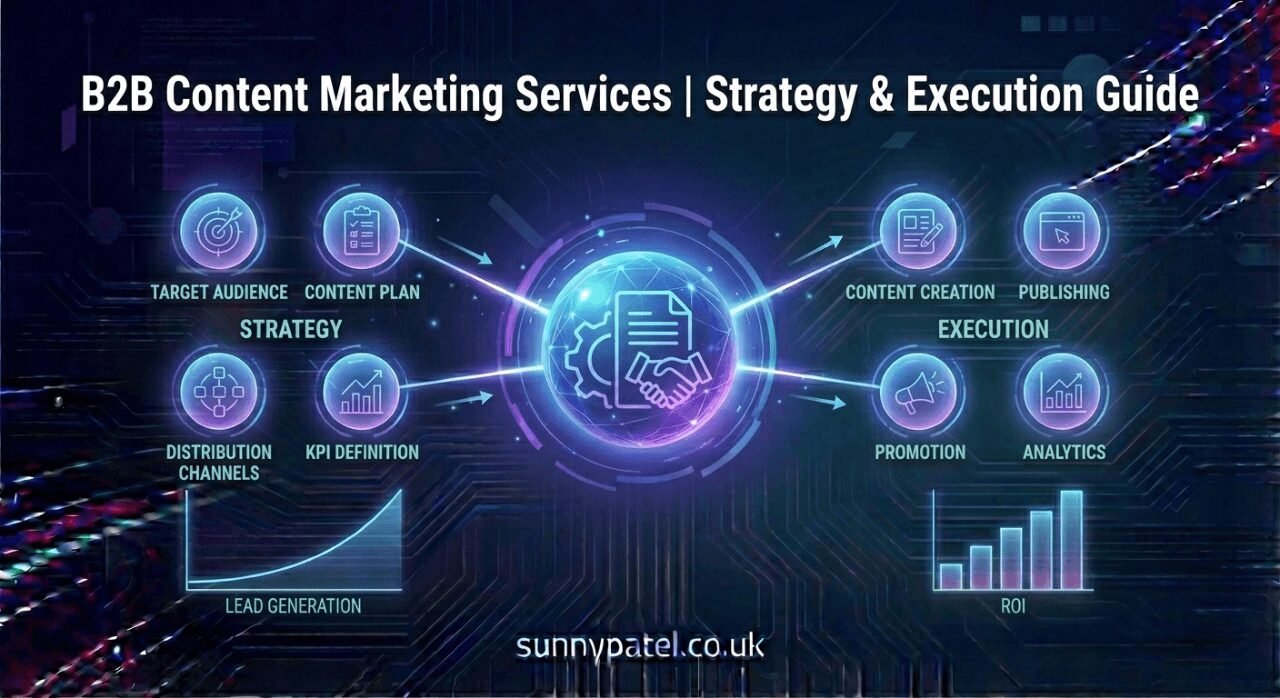
B2B Content Marketing Services | Strategy & Execution Guide
B2B content marketing fails when agencies apply B2C tactics to complex business sales. Here's what actually works for B2B lead generation.
Why B2B Content Marketing Differs
B2B buyers research thoroughly before purchasing. Sales cycles span weeks or months. Multiple stakeholders influence decisions. Your content must address entire buying committees, not individual consumers.
B2B content marketing services that work understand:
- Content targets different roles (technical users, managers, C-suite)
- Sales cycles require nurturing through multiple touchpoints
- Educational content builds trust before sales conversations
- Thought leadership influences shortlist inclusion
Generic blog posts don't achieve these objectives.
Strategic B2B Content Framework
Stage 1: Awareness (top-of-funnel)
Target: Prospects identifying problems or researching solutions
Content types:
- Industry insight reports
- Problem-focused guides
- Trend analysis and predictions
- Educational resources
Goal: Position your brand as knowledgeable resource worth following.
Stage 2: Consideration (mid-funnel)
Target: Prospects evaluating solution approaches and providers
Content types:
- Solution comparison guides
- Methodology explanations
- Case studies showing results
- Detailed capability demonstrations
Goal: Demonstrate your approach's superiority and build confidence.
Stage 3: Decision (bottom-funnel)
Target: Prospects comparing specific vendors and finalising decisions
Content types:
- Detailed case studies
- ROI calculators
- Implementation guides
- Customer testimonials
Goal: Provide final validation supporting vendor selection.
Most B2B content focuses on awareness, neglecting mid and bottom funnel content where conversion happens.
Content That Generates B2B Leads
Original research and data:
Surveys, industry analysis, or proprietary insights position you as authority whilst generating media coverage and backlinks. Other businesses cite and link to valuable data.
Example: "State of UK Professional Services 2024" report surveying 500 firms.
Comprehensive guides:
In-depth resources addressing complete topics become industry references. These build topical authority whilst capturing organic search traffic.
Example: "Complete Guide to B2B Lead Generation Through Search" (5,000+ words covering all methods).
Detailed case studies:
Show specific results for specific clients. Include challenges, solution, implementation, and measurable outcomes. Generic "we increased traffic 300%" means nothing without context.
Example: "How [Company] Generated £2.4M Pipeline Through Semantic SEO Strategy"
Problem-solution content:
Address specific business challenges your target customers face. Explain problems thoroughly before pitching your solution.
Example: "Why Your Sales Team Struggles to Find Qualified Leads (And How to Fix It)"
Comparison content:
Help prospects evaluate approaches objectively. Address competitor methodologies fairly, explaining when they work and when yours works better.
Example: "Traditional Link Building vs. Semantic SEO: Which Delivers Better ROI?"
SEO for B2B Content
B2B keywords have lower search volume but higher value. "enterprise sales CRM software" gets 100 searches monthly but each search represents £10,000+ potential contract.
B2B keyword research priorities:
Target problem-based queries:
- "how to improve sales pipeline visibility"
- "why marketing qualified leads don't convert"
- "reduce customer acquisition cost strategies"
Target solution evaluation queries:
- "best practices for content strategy"
- "semantic SEO vs traditional SEO"
- "in-house vs agency content marketing"
Target comparison queries:
- "HubSpot vs Salesforce for SMBs"
- "content marketing vs paid advertising ROI"
- "WordPress vs custom CMS for B2B"
These queries indicate active research and solution evaluation.
Keyword research services for B2B focus on buyer intent and commercial value rather than pure search volume.
B2B Content Distribution
Creating content is half the work. Distribution drives visibility:
Owned channels:
- Your website and blog (SEO foundation)
- Email nurture sequences
- LinkedIn company page
- Industry-specific newsletters
Earned channels:
- Guest contributions to industry publications
- Speaking opportunities at conferences
- Podcast appearances
- Media coverage for original research
Paid channels:
- LinkedIn sponsored content (best B2B paid channel)
- Industry publication sponsorships
- Retargeting to website visitors
- Account-based marketing to target accounts
Owned channels build long-term assets. Earned channels build authority. Paid channels accelerate awareness.
Common B2B Content Mistakes
Mistake 1: Product-focused content
Writing about your product's features doesn't help prospects research problems and solutions. Educational content builds trust. Product content comes later in sales process.
Mistake 2: Ignoring search intent
Publishing thought leadership nobody searches for generates zero organic traffic. Balance SEO-driven and original thinking content.
Mistake 3: Inconsistent publishing
Publishing 5 articles one month then nothing for 3 months prevents momentum. Consistent weekly or biweekly publishing builds authority systematically.
Mistake 4: Neglecting technical elements
B2B buyers are often technically sophisticated. Slow sites, poor mobile experience, or basic content damages credibility.
Technical SEO audits ensure your content foundation supports trust-building rather than undermining it.
Mistake 5: Measuring vanity metrics
Blog traffic doesn't matter if it doesn't generate leads. Track:
- Qualified lead generation from content
- Content-influenced pipeline value
- Sales cycle length for content-engaged prospects
- Customer acquisition cost by channel
Building B2B Content Authority
Authority in B2B comes from demonstrated expertise, not claimed expertise.
Show, don't tell:
- Share specific methodologies
- Publish detailed frameworks
- Provide implementation guidance
- Demonstrate results transparently
Go deeper than competitors:
- 2,000+ word guides vs. 500-word summaries
- Specific tactics vs. generic best practices
- Data-backed insights vs. opinions
- Actionable steps vs. inspirational fluff
This depth follows semantic SEO principles, creating comprehensive topic coverage search engines recognise as authoritative.
Topical map creation for B2B identifies all relevant topics within your expertise area, ensuring comprehensive coverage rather than scattered content.
Content Production: In-House vs Agency
In-house advantages:
- Deep product and industry knowledge
- Faster turnaround (no briefing overhead)
- Better cost per piece at scale
- Integrated with sales feedback
In-house challenges:
- Requires hiring specialist writers
- Limited bandwidth for consistent production
- Potential quality inconsistency
- Difficulty scaling production
Agency advantages:
- Professional writing quality
- Scalable production capacity
- Fresh external perspectives
- Established processes
Agency challenges:
- Requires extensive briefing
- Higher cost per piece
- Knowledge transfer overhead
- Variable quality between agencies
Hybrid approach works best:
- In-house team owns strategy and subject matter expertise
- Agency/freelancers handle production at scale
- Content briefs bridge the gap, ensuring external writers produce strategically aligned content
I provide strategic direction through content briefs and topical maps whilst clients handle writing in-house or through their preferred writers.
Realistic B2B Content Timelines
Months 1-3: Foundation
- Strategic planning and topic mapping
- Initial content production (10-15 pieces)
- Technical setup and distribution channels
- Early organic visibility for low-competition terms
Months 3-6: Building momentum
- Consistent publishing establishing patterns
- Early lead generation from content
- Growing organic traffic and rankings
- Refinement based on performance data
Months 6-12: Compounding returns
- Authority signals strengthening
- Multiple content pieces supporting lead nurture
- Increased organic visibility
- Measurable pipeline influence
Year 2+: Sustained advantage
- Comprehensive topical coverage
- Dominant organic visibility
- Reduced customer acquisition costs
- Competitive moat through content library
B2B content marketing is long-term strategy, not quick-win tactic.
When to Invest in B2B Content
Content marketing works best for:
- Complex products requiring education
- Long sales cycles (2+ months)
- Multiple decision-makers involved
- High customer lifetime value (£10,000+)
- Competitive markets needing differentiation
Content marketing struggles for:
- Simple transactional products
- Impulse purchases
- Very short sales cycles
- Low-value offerings
- Extremely niche markets with minimal search volume
Next Steps for B2B Content Strategy
Building effective B2B content requires:
- Clear understanding of buyer journey
- Comprehensive topic coverage planning
- Consistent production and distribution
- Performance measurement and refinement
Most businesses attempt content marketing without strategic foundation, producing scattered content lacking cohesive authority building.
Need help developing B2B content strategy? Contact me for a consultation mapping your content opportunities and creating systematic publishing roadmap.